SINGAPORE: Recent announcements from the United States have stunned the international community, starting from President Donald Trump’s “Liberation Day” tariffs in early April, which Prime Minister Lawrence Wong warned could hit trade-reliant Singapore harder than other countries.
And yet, in some ways, Singapore appears to enjoy somewhat of a privileged status in its relationship with the world’s largest economy. Case in point: H1B visas and tariffs on pharmaceuticals. For these, Singapore is coming out luckier than most.
H-1B visas
On Sept 19, President Trump announced that H-1B visas would come with a whopping fee of US$100,000 (S$129,000). The visa allows highly educated professionals to work in the US in speciality occupations. Previously, each visa application typically cost between US$2,000 (S$2,580) and US$5,000 (S$6,450).
The sudden increase in the fee is expected to affect the US healthcare system, which has been reliant on foreign nationals, but has also shattered the dreams of young professionals from countries such as India, as the New York Times put it.
Singaporeans wishing to work in the US, however, have no such worries, at least for now. The US Embassy in Singapore announced simply on its Facebook page on Monday (Sept 29) that Mr Trump’s announcement did not apply to the city-state.
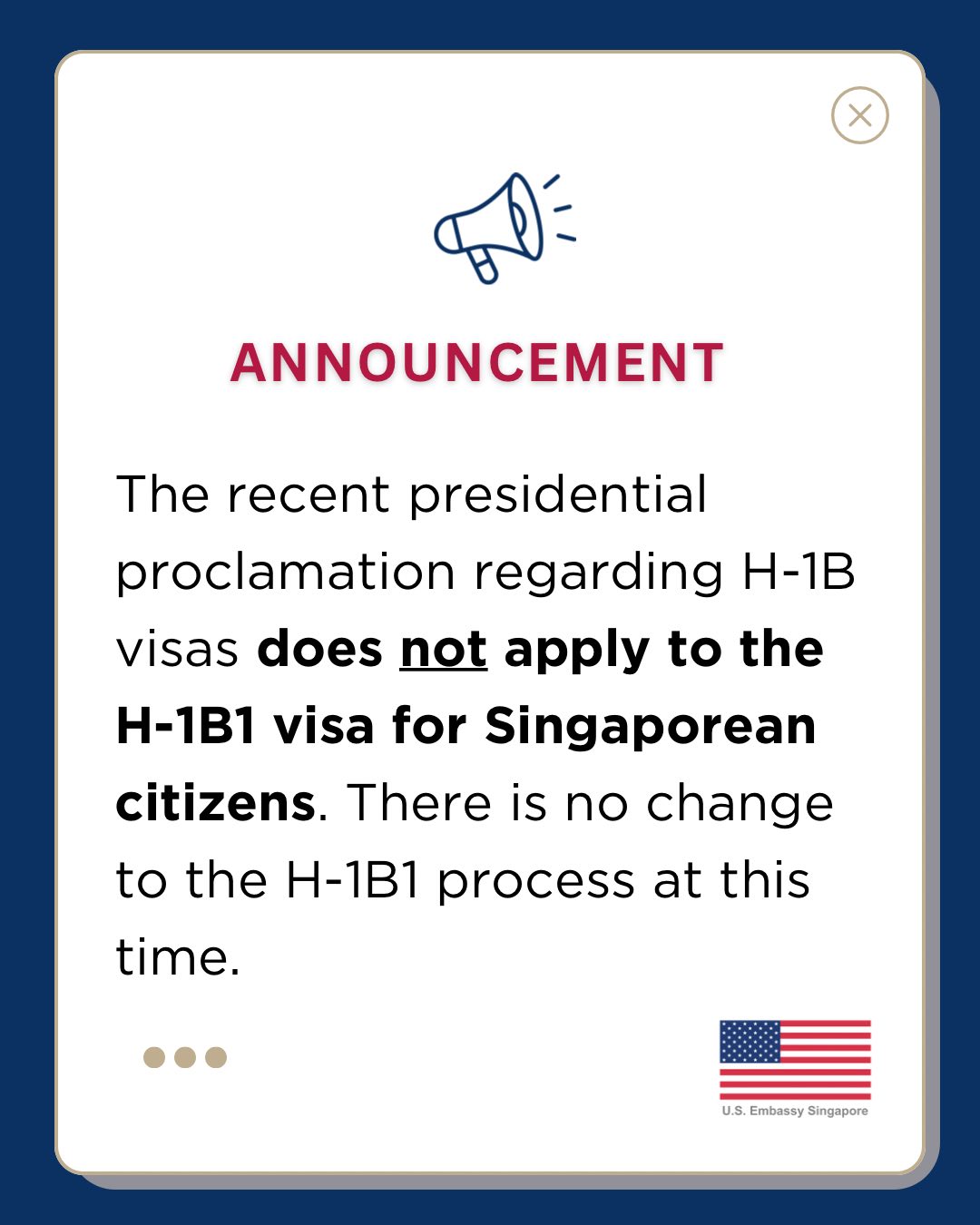
Under Free Trade Agreements, Singaporeans and Chileans have a specific visa classification, the H-1B1, which comes with more benefits than regular H-1B visas. Singaporeans are offered up to 5,400 visas per year, although last year, only 939 were availed of.
Pharma tariffs
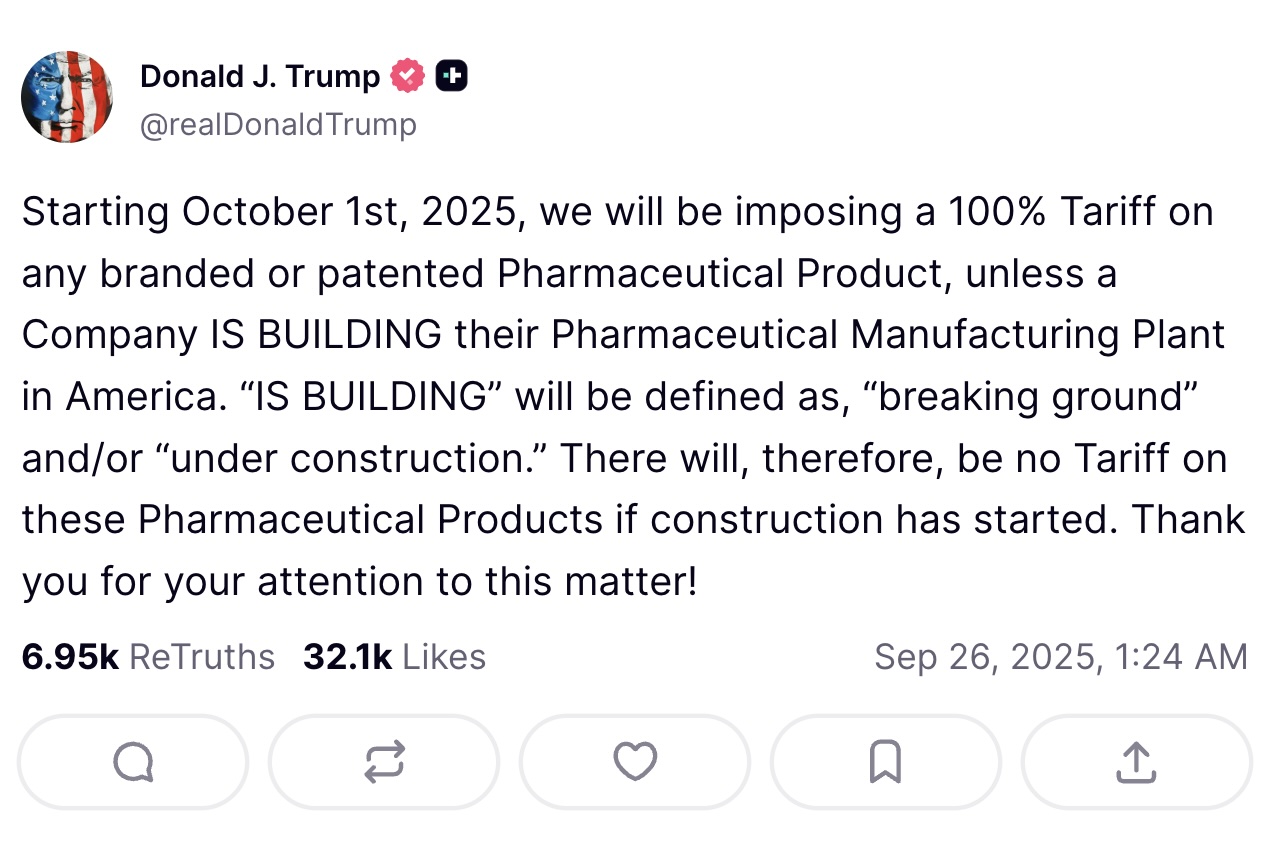
Last Thursday (Sept 25), after some months of threatening to do so, President Trump said from Oct 1, that branded or patented pharmaceutical products would be slapped with a 100 per cent tariff. Companies would be exempt from this if they are presently building a manufacturing plant in the US.
“There will, therefore, be no Tariff on these Pharmaceutical Products if construction has started,” Mr Trump said in a post on Truth Social.
There is about US$3.10 billion (S$4 billion) worth of pharmaceutical products exported from Singapore to the US, most of which are branded. Thirteen per cent of all of the city-state’s exports to the US is made up of pharmaceuticals.
On Saturday (Sept 27), Deputy Prime Minister Gan Kim Yong said these new tariffs may not have an “immediate impact” on Singaporean pharmaceutical companies. Moreover, Mr Gan, who is also Trade and Industry Minister, added that Singapore may seek a deal putting a cap on tariff rates that the US has with other countries. At present, Singapore is in talks with the US regarding semiconductor manufacturing.
“Ultimately, we hope to be able to have an arrangement with the US to allow us to continue to be competitive in the US market, to allow our pharmaceutical companies to be able to continue to export to the U.S. market.
As to whether the tariff rate will be 15% or any other tariff is something that is part and parcel of the negotiation, but we do look forward to having some preferential treatment versus the current top-line tariff the US has imposed,” Reuters quoted DPM Gan as saying. /TISG
Read also: Reuters report counts Singapore among ‘potential winners’ from US tariff ‘onslaught’




