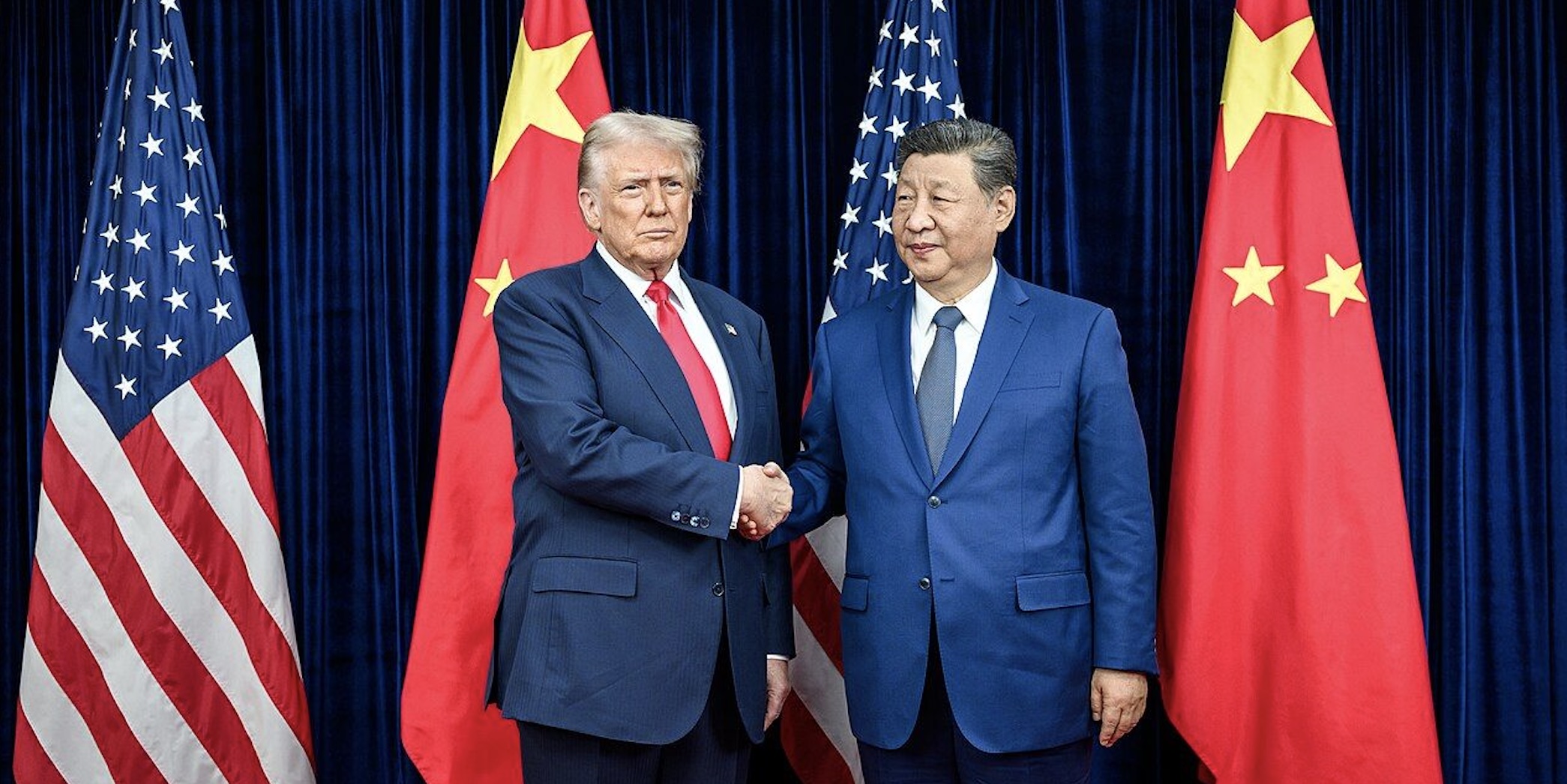
The United States has suffered no small degree of reputational damage in the wake of the war in the Middle East, as the conflict continues to affect countries across the globe, particularly because of the energy crisis that has resulted from the closure of the Strait of Hormuz.
The world’s other superpower, China, meanwhile, appears to be gaining ground. In late March, officials from China and Pakistan presented a five-point plan to bring about a ceasefire, as well as the reopening of the strait.
Perhaps even more significantly, in a telephone conversation on Monday (April 20) with Saudi Arabia’s Crown Prince Mohammed bin Salman, President Xi Jinping called for the normal passage of vessels through the strait.
Xinhua, China’s state news agency, has quoted Mr Xi as saying that the conflict needs to be resolved through political and diplomatic means.
Loss of soft power
Not too long ago, the US was established as a leader in soft and hard power, but was generally believed to be a benevolent force across the globe in many parts of the world.
With the war in Iran that many, including top US officials, advised against, this appears to be changing.
“Because of Donald Trump and his war in Iran, American popularity will descend to depths it has not seen this century and may never recover,” wrote diplomat Richard Stengel in The Guardian on April 5. “Confidence in Trump’s ability to navigate global affairs was already around 30-40% before the invasion of Iran. That will be the new ceiling.”
European leaders, both on the right and the left, are standing up to Mr Trump. Spain’s Pedro Sanchez and Italy’s Giorgia Meloni have both recently spoken up against the US President, which is being taken as a sign of how low his standing has fallen. The Italian Prime Minister is not the only right-wing figure in Europe to distance herself from Mr Trump. Leaders and parties in the UK, France, and Germany have all been critical of the US president.
Enter China
Mr Xi’s phone call, which had been initiated by the Saudi Crown Prince, is being taken by some analysts as a sign of China’s ascendancy, especially since Riyadh has long been allied with the United States.
Moreover, Saudi Arabia is widely seen as a leader in the region, and its actions are likely to hold a significant influence.
China is supportive of Middle Eastern nations in “taking their future and destiny into their own hands, and promoting long-term regional stability and peace,” Mr Xi told Prince Mohammed bin Salman.
The Chinese President met with the crown prince of Abu Dhabi in Beijing last week, where he called for parties to adhere to international law. /TISG
Read also: War in Iran is putting a strain on US-Singapore relations
This article (China fills void as the US loses ground worldwide due to Iran War) first appeared on The Independent Singapore News.