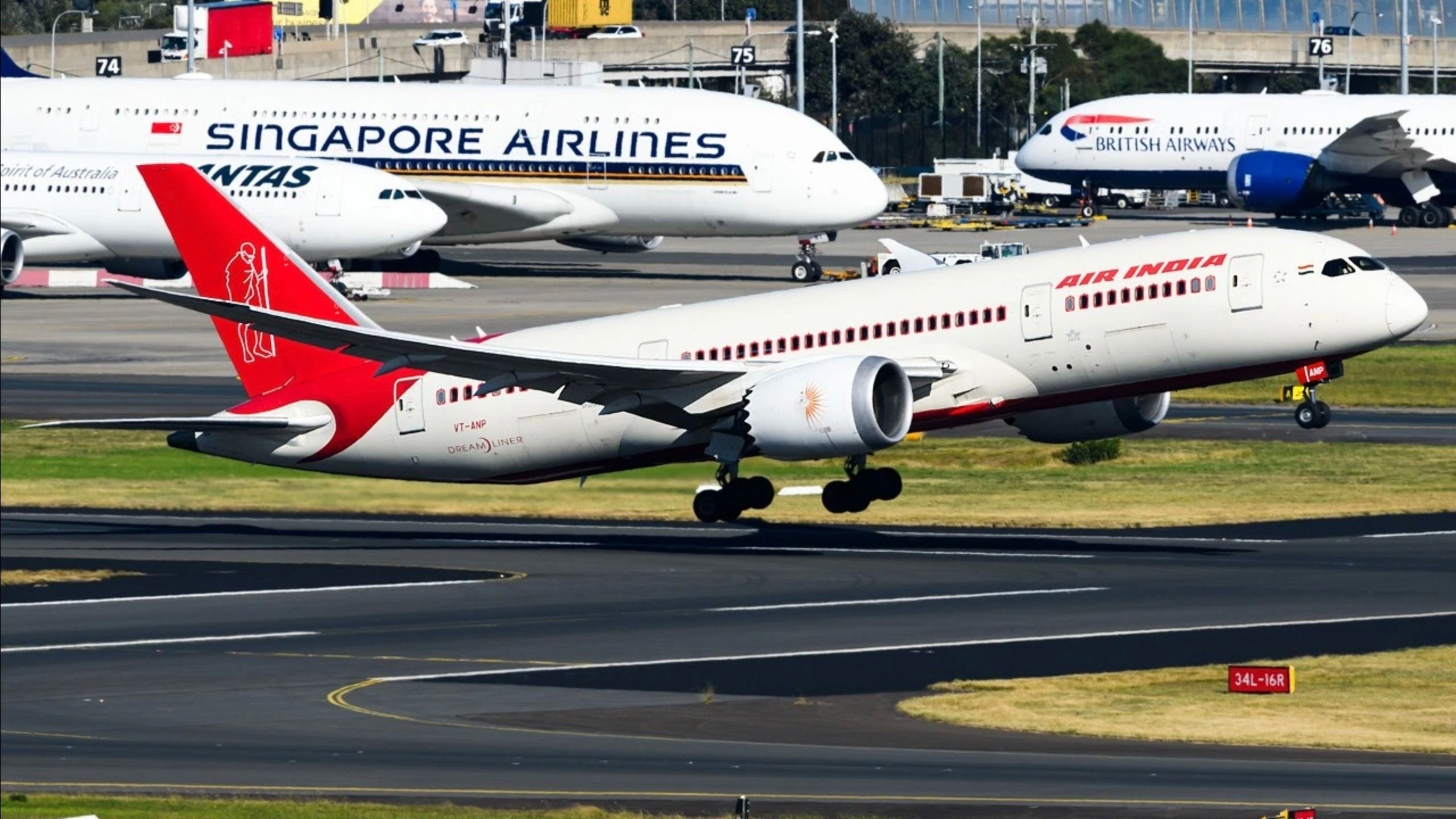
SINGAPORE: Singapore Airlines (SIA) chief executive Goh Choon Phong has described Air India’s transformation as a “long game” with “no shortcut”, while reaffirming the Singapore carrier’s commitment to supporting the Indian airline despite mounting losses and operational challenges.
Speaking at SIA’s results briefing on Friday (May 15), Mr Goh spent a significant portion of the session addressing questions about SIA’s 25.1 per cent stake in Air India, which posted a record US$2 billion loss in the last financial year and has faced scrutiny following a 2025 plane crash that killed 260 people.
Mr Goh said SIA had always understood the scale of the challenge when it first entered the Indian market through its joint venture with Tata Sons to launch Vistara in 2015.
“We have never had any illusion that it is an easy path,” he said. “Way back when we started the joint venture with our partner Tata Sons to set up Vistara, we knew at that point in time that it is a long game.”
Vistara later merged with Air India in 2024, with SIA investing S$360 million as part of the transaction.
Mr Goh said SIA’s investment in India is tied to the airline group’s broader “multi-hub strategy”, which he described as critical for long-term growth given Singapore’s limited domestic market and physical constraints.
“Even with Terminal 5, at some point in time, we know that that capacity will be used up. Fundamentally, we are in a small market with no domestic operations,” he said.
He pointed to the COVID-19 pandemic as an example of SIA’s vulnerability as an airline without domestic routes, noting that border closures at the time left the carrier heavily reliant on cargo services.
India, Mr Goh added, represents a major long-term opportunity. The country is currently the world’s third-largest aviation market, but still has significantly fewer aircraft than the United States and China. He also highlighted forecasts showing India’s middle class could double to 864 million people by 2047, alongside rising disposable incomes and expanded airport infrastructure.
“If you look at India today, I don’t think there’s any question about its growth potential,” he said.
At the same time, Air India is facing multiple pressures.
Mr Goh identified two broader industry issues affecting the airline: global supply chain disruptions that are delaying fleet renewal and cabin retrofit programmes, and the impact of the Middle East crisis.
He also outlined three problems specific to Air India: Pakistan’s closure of its airspace to Indian carriers, the operational fallout from the AI171 crash, which led to a voluntary safety pause and reduced flight frequencies, and the weakening Indian rupee against the US dollar.
“These are certainly headwinds, but these are all external factors,” Mr Goh said, while adding that Air India’s customer loyalty and satisfaction ratings have shown improvement.
He stressed that Tata Sons, Air India’s controlling shareholder, remains committed to the airline’s restructuring efforts alongside SIA.
“We are committed to support Air India in its transformation efforts, but we’re not alone,” he said, “We want to make Air India a world-class carrier and airline with an Indian heart.”
Executives declined to disclose how much additional capital SIA may inject into Air India, saying such matters would need to be discussed with shareholders. They did, however, reveal that two SIA staff members have been seconded to Air India to serve as chief operations officer and chief of engineering.
When asked how long shareholders may have to wait before Air India turns around financially, Mr Goh said the more important issue was whether the airline is making structural progress and whether current challenges stem from internal weaknesses or external pressures.
SIA executives were also questioned about the possibility of higher airfares as fuel costs rise amid tensions in the Middle East.
Chief commercial officer Lee Lik Hsin did not commit to any fare increases, saying pricing decisions depend on market conditions and consumer demand.
“We want to price at a point that customers are still willing to buy, so we will have to watch the market carefully,” he said.
The airline group has previously said that fare adjustments across the SIA and Scoot networks have not been enough to fully offset higher jet fuel costs, which remain its largest operating expense.
SIA’s FY2025/2026 results only captured one month of disruption linked to the Middle East crisis, which escalated on Feb 28. The airline expects the full financial impact to be reflected in FY2026/2027.
On Thursday, SIA reported a 57.4 per cent drop in annual profit to S$1.18 billion for FY2025/2026.
The decline was attributed largely to the absence of a S$1.1 billion one-off gain from the Vistara integration recorded a year earlier, as well as losses linked to Air India.
Chief operations officer Tan Kai Ping said fuel supply across SIA’s network remains stable for now, although he cautioned that the situation remains unpredictable.
“The first thing that will happen when fuel supply runs short will be fuel rationing at airports,” he said, adding that such measures have not been implemented at present.
Mr Goh also said SIA has taken a different approach from some airlines that have reduced capacity due to the Middle East conflict.
While the airline has cut some Dubai services and postponed the launch of flights to Riyadh, it has also increased capacity on other routes, particularly in Europe, where its network has grown by around 13 per cent compared with levels before the conflict involving Iran.
“We are in a position where we don’t need to cut capacity,” Mr Lee said, “Our financial position is strong, and therefore we are actually growing rather than cutting capacity.”
This article (‘We want to make Air India a world-class carrier’—SIA says Air India transformation will take time amid losses and operational challenges) first appeared on The Independent Singapore News.




